

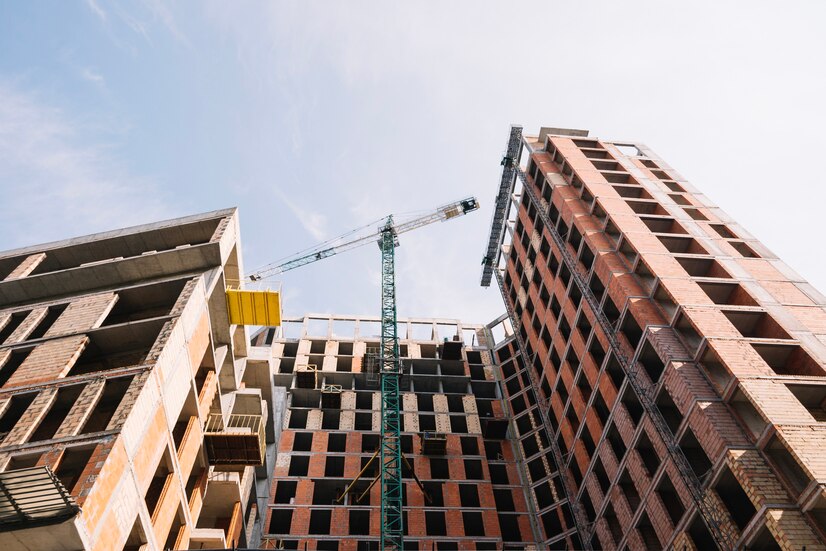
The data cable plant, installed against the construction schedule
This page covers one deliverable on a building under construction: the permanently installed copper and fiber data cabling. Work area outlets, horizontal runs back to the telecommunications rooms, backbone between those rooms, terminations, field certification, and the labeled as-built record handed over at closeout.
Three neighboring subjects are deliberately not on this page. Holding the low-voltage trades together — who owns which system, submittals, shared pathway, firestopping, cross-system commissioning — is covered on new-construction low-voltage infrastructure. Wireless coverage and RF design is on Wi-Fi network installation. Cabling inside a finished, occupied building belongs on structured cabling installation, because once the ceilings are closed the constraints are a different problem entirely.
What gets settled on paper, before a reel is opened
Quantities and cable selection are fixed long before the pull. The outlet count per work area, per conference room, per access point location and per piece of building equipment drives labor, tray fill, patch panel ports and rack space all at once, which makes it the number most worth arguing about early.
Category selection follows what the outlet has to feed, not a house preference. Category 6A is the usual answer where a run serves a multigigabit access point or a higher-power PoE device, because bundle heat rise and insertion loss both matter more as PoE current climbs. Backbone media is a separate decision: singlemode where the link may later carry higher rates or stretch across a campus, multimode where the distance is short and the optical budget decides it. The fiber build itself is described on fiber optic installation.
Telecommunications room placement is a floor plan argument rather than an afterthought. Every outlet on the floor has to reach its room inside the 90-meter permanent link limit measured along real routing, not a straight line on a drawing. Rooms pushed into whatever space is left over tend to arrive without the door swing, wall backing, or cooling they need, and that is expensive to correct after the slab is poured.
Rough-in
Before cable arrives, sleeves, conduit stubs, cable tray, support hardware, boxes and mud rings have to be installed and inspected, and backboards have to be up in the rooms. Rough-in is the cheapest moment to correct an undersized pathway. It is also the last one.
The pull window
Cable goes in after the building is weathertight and before the ceiling grid closes. That window is bounded on both sides by other trades and it is usually short. Missing it means pulling above finished ceilings later at a multiple of the original labor.
Termination and trim
Jacks, patch panels and fiber terminations follow finishes, with cable ends protected in the interim. Trim is also when labeling is applied at both ends of every run, against the identifier scheme the owner will actually use for the life of the building rather than one invented on site.
Certification and turnover
Each permanent link is tested to the standard the specification names, with results retained per cable identifier instead of summarized into a pass rate. Manufacturer system warranties are registered against those results and the installed component list, so confirm early which warranty the owner expects, because it constrains what can be mixed. The test and record regime is covered on network testing and documentation.
Where the region changes the job
In dense urban construction in New York and Boston, the backbone riser is often the tightest coordination on the project. Shaft space is shared with mechanical and electrical, sleeve locations are committed before anyone wants them to be, and core drilling carries its own approval path. On the southeast coast the pressure runs the other way: buildings dry in quickly, and the pull window can open before pathway inspection is ready for it.
Talk through a building in design or already framed
Send the drawings, the specification section and the current schedule, and we can identify what has to be resolved before rough-in. Call (888) 360-0035, or reach the Charlotte office at 6201 Fairview Rd, 2nd Floor, Charlotte, NC 28210. TekRoute works across North and South Carolina, Georgia, Florida, Virginia, Maryland, New York, New Jersey, Massachusetts, Tennessee, Kentucky and West Virginia.